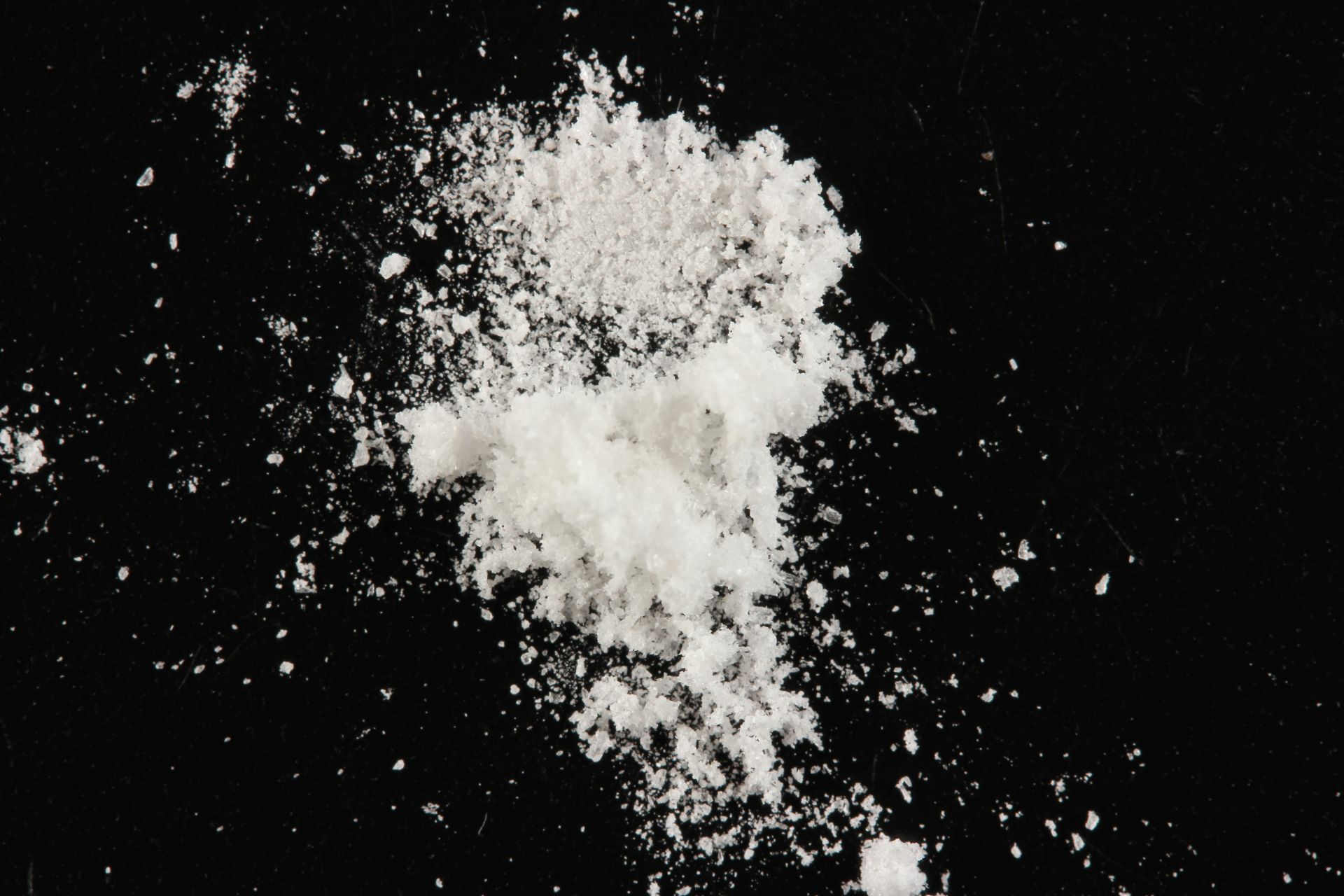

In 2024, DIZ Zurich analyzed a total of 189 ketamine samples (4.7% of all samples, n=4022). Around a quarter of the ketamine samples were purchased online (Darknet, Internet or Telegram), and just over half of the samples were purchased through personal contacts.
On average, the 189 samples declared ketamine contained 92.3% ketamine. Almost all samples contained an active ingredient content of over 80%, only 9 of the samples declared as ketamine contained less. In 14 of the 189 samples declared as ketamine, impurities and/or extenders were found, including MDMA, caffeine, 2-PEA, amphetamine and phenibut. Two of the samples analysed contained an unknown substance and one of the samples turned out to be a mixture of cocaine and ketamine.
However, the laboratory again analysed false declarations this year: two of the samples declared as ketamine contained only MDMA, a sample contained only the Cathinone 4-MMC (mephedrone), one sample contained exclusively methamphetamine and no psychoactive substances were found in two samples. One of the samples also contained a mixture of a non-psychoactive substance and paracetamol.
The analysis of ketamine does not include Chirality determination (R- or S-ketamine), as the analytical effort per sample is too great. However, if ketamine is obtained illegally, racemate (balanced ratio of R- and S-ketamine) can be assumed.
In 2024, a total of 44 drugs purchased illegally were tested at DIZ Zurich (1.1% of all samples, n=4022). Around 60% of samples were purchased online (Darknet, Internet or Telegram) and 30% of samples were purchased via private contacts.
16 of the 44 drugs tested were used as alprazolam (Xanax®) declares and is therefore the most frequently tested illegally purchased drug in the DIZ in 2024. In contrast to previous years 2023 and 2022, alprazolam samples were effectively detected in 11 out of 16 samples — in previous years, the proportion of alprazolam in Xanax samples was significantly lower. In 4 of the samples sold as Xanax®, the laboratory was unable to identify any psychoactive ingredients; one sample contained the new psychoactive substance instead of alprazolam flualprazolam.
4 of the illegally purchased drugs dispensed in 2024 were considered Diazepam (Valium®) declared that all samples effectively contained diazepam. 3 of the samples delivered as drugs were oxycodone declares that a sample contains only the painkiller acetominophen (acetaminophen) and a sample purchased on the Darknet contained the highly potent synthetic opioid metonitazene as well as bromazolam and an unknown substance. Other drugs obtained illegally were used as dexamphetamine (2 samples), Adderall (2 samples), tramadol (1 sample) and Diaphin (1 sample) delivered.
In 2024, a total of 84 were registered at DIZ Zurich as 2C-B declared samples submitted (2.1% of all samples, n=4022), including 38 in powder form, 44 in pill form and 2 liquids. Of the 84 samples, 41 were purchased via online channels (Internet, Darknet and Telegram), 37 samples were purchased via private contacts.
The active ingredient content of the pills dispensed in DIZ was between 4.0 mg and 19.5 mg 2C-B; on average, the 2C-B pills dispensed in 2024 contained 12.7 mg 2C-B. However, this is in stark contrast to 2C-B pills from national drug checking offerings, in which Pills of up to 45 mg 2C-B were detected. One pill declared as 2C-B contained only 147.6 mg MDMA, another pill contained the potent, new psychoactive substance α-PhiP, which is related to deaths in Europe. In eight of the 44 2C-B pills, one or more synthetic contaminants could be detected.
More than a third of the powder samples declared as 2C-B contained, in addition to 2C-B, synthetic impurities, 2C-H or 2-Br-4,5-DMPEA, which indicates improper production or inadequate purification. 16 of the powder samples contained up to four synthetic impurities. One powder sample contained only 50% MDMA, another sample contained only amphetamine and caffeine. Two of the 2C-B powder samples consisted of MDMA and ketamine, which indicates confusion with Tusi/Tucibi/Pink Cocaine suggests.
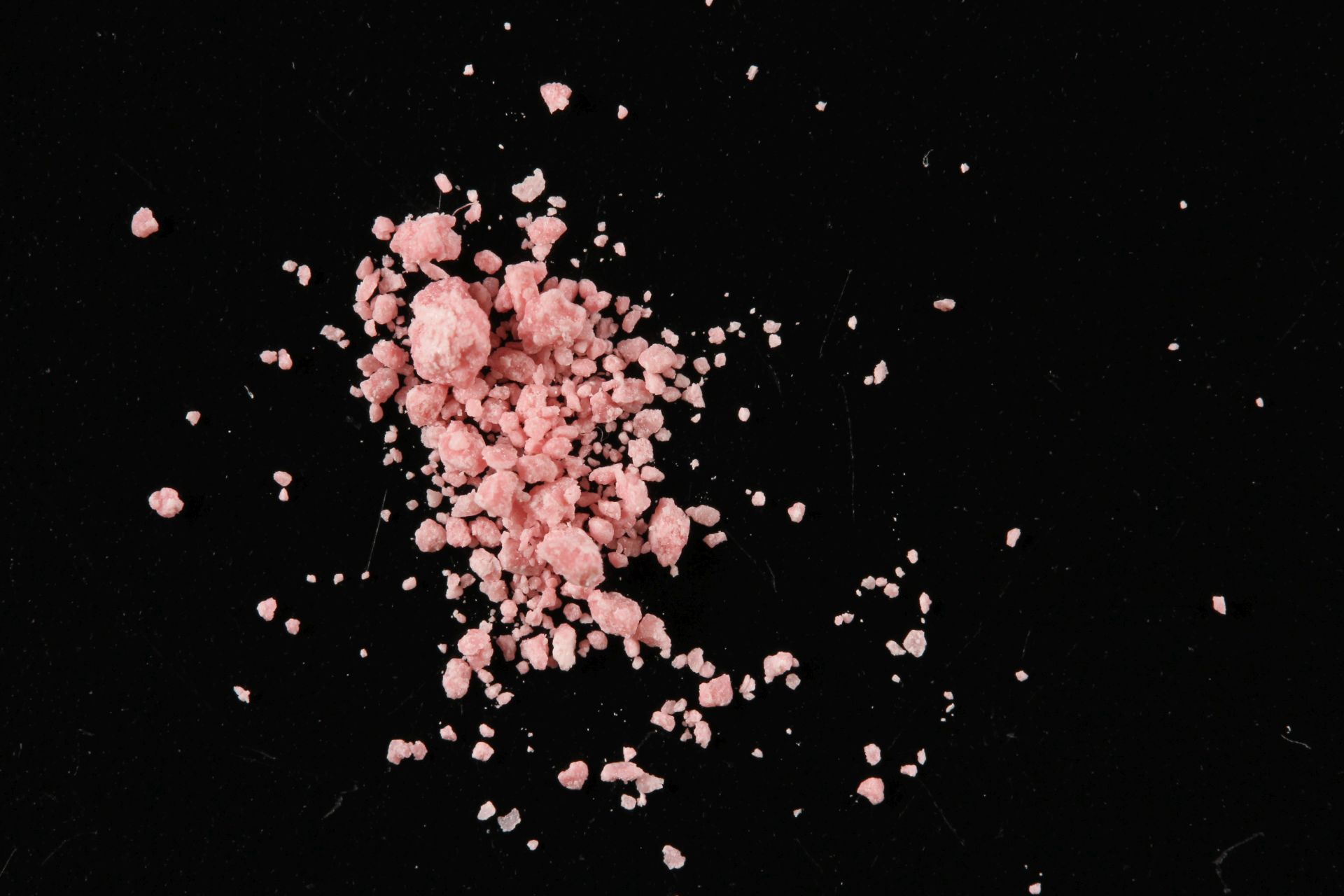
In 2024, a total of 13 were registered at DIZ Zurich as Tusi or Tucibi declared samples submitted (0.3% of all samples, n=4022). A pink powdered mixture of different psychoactive substances is often sold as Tusi or Tucibi. In most cases, this is a mixture of ketamine and MDMA, which sometimes in addition caffeine or 2C-B contains.
Only 3 of the 13 samples contained exclusively the mixture of MDMA and ketamine, understood as Tusi. 10 samples contained at least three psychoactive substances, including 3MMC, 2C-B, paracetamol and the BMB and MAL mescaline derivatives. In addition, it can be found that the samples each contain very different proportions of ketamine, MDMA and other active substances.
In 2024, a total of 59 were registered at DIZ Zurich as methamphetamine declared samples submitted (1.5% of all samples, n=4022). Of the 59 samples, 11 were purchased via online channels (Internet, Darknet, Telegram and other social media), 44 samples were purchased via private contacts.
On average, the 59 samples declared as methamphetamine contained 97.2% methamphetamine. All samples containing active ingredient contained a content of over 90%. No impurities and/or extenders were found in any of the methamphetamine samples submitted to DIZ in 2024. However, two of the samples analyzed did not contain any psychoactive ingredients.
The analysis of methamphetamine does not include Chirality determination (R- or S-methamphetamine), as the analytical effort per sample is too great. However, this ratio may have an effect on the potency of methamphetamine, which may result in a stronger or weaker experience of intoxication.
In 2024, a total of 36 were registered at DIZ Zurich as heroin declared samples submitted (0.9% of all samples, n=4022). Of the 36 samples, 5 were purchased via online channels (Internet or Darknet), 21 samples were purchased via private contacts.
On average, the samples declared as heroin contained 33.8% heroin, with the active ingredient content fluctuating significantly (between 0.8% and 92.1% heroin). There appears to be no connection between the quality and the price paid in the tested heroin samples, but samples purchased via online channels contained a higher active ingredient content.
All heroin samples submitted in 2024 contained the expected active ingredient heroin as well as extenders such as caffeine (28 samples) and paracetamol (28 samples). In addition to heroin, caffeine and P, a sample also contained 6% of Iso-4-MMC. An unknown compound could be analyzed in three samples, and two samples contained unknown impurities and/or synthetic impurities. The synthetic opioid was not found in any heroin sample fentanyl or a similar substance is detected.